Tight Access Excavation: How Small Diggers Get Into Impossible Backyards
Backyard behind the house? Narrow side access? Tight access excavation explained — machine sizes, what fits through a gate, and how the job gets done in 2026.
The most common phone call we get: "everyone says the digger won't fit." Nine times out of ten, it does. What you need isn't a bigger driveway — you need the right size machine and someone who's done it before. Here's how tight access excavation actually works.
— What Actually Fits Where
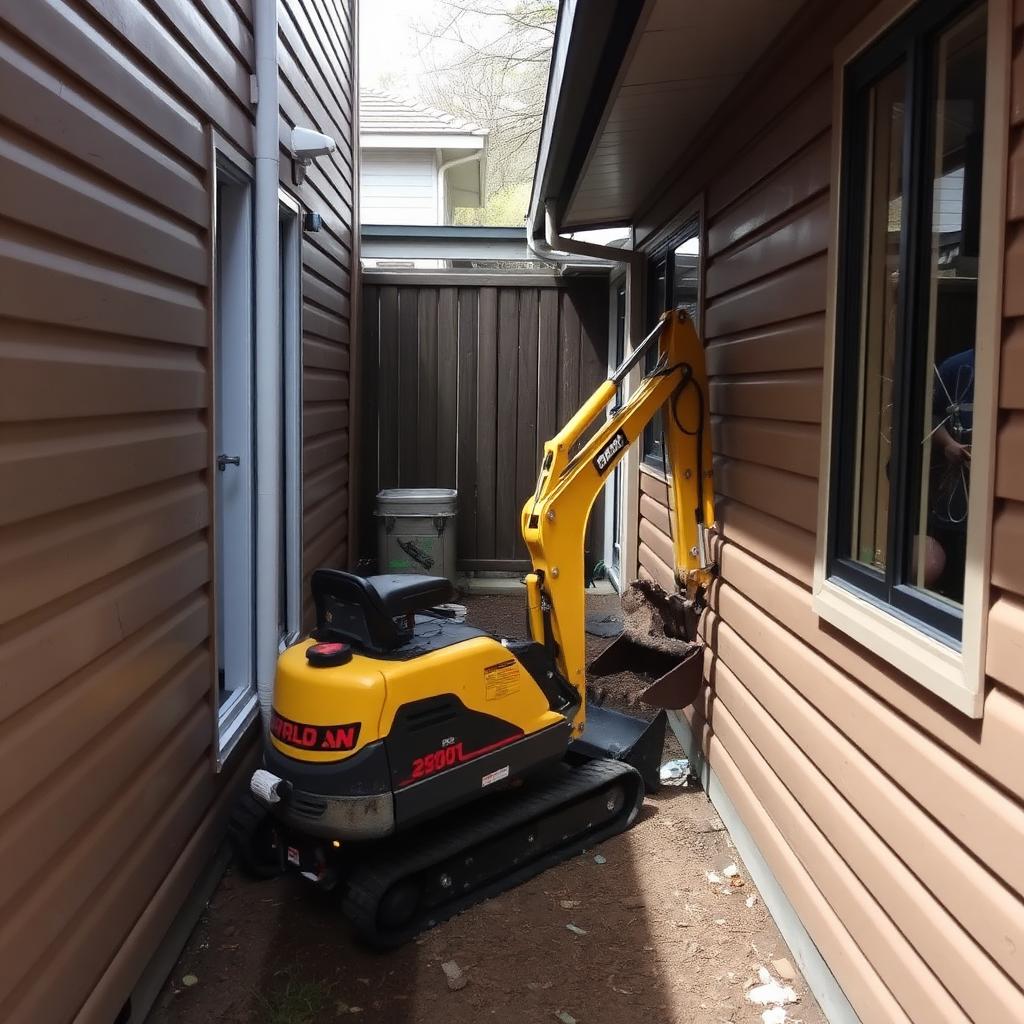
Mini machines (1.8-2 tonne). Built for tight access. Fit standard gate widths and narrow side paths. This is the machine that gets into backyards, between houses, down side alleys — where everyone else says it can't be done.
Mid-size (around 5 tonne). Needs driveway-width access. If you can get a small car down the side, you can usually get a 5T in.
Heavy (10-13T+). Open access only. Front sections, subdivisions, anywhere the machine can drive straight in.
The right answer is sizing the machine to the gap, not demolishing the gap to fit the machine. Any quote that involves "we'll take your fence down and put it back" for a job the mini could reach is a quote worth checking.
— How a Tight Access Job Runs
Site walk first. Measure the gap, check what's overhead (wires, eaves), look at what surface the machine has to cross to get to the work.
Protect the path. Ground mats over grass, plywood over pavers where they need it. Nothing between the truck and the work should get worse during the job.
Machine in. Compact machines drive on their own tracks or come off a small trailer. No craning for standard tight-access work.
Spoil relayed out. This is where tight access adds time. A big machine loads a truck direct. A small machine loads a smaller barrow-style dumper, which shuttles to the truck at the front. More trips, more time — but the work still gets done.
Sequenced work. Confined spaces need order. Wrong sequence and the machine paints itself into a corner. Right sequence and it works its way back out to the gate.
— What Tight Access Does to Price
Honest answer: it adds time, so it adds cost. A backyard dig that would be a half-day on open access is often a full day in tight access — more shuttle runs to move spoil, slower cycle times, more care around boundaries.
What it doesn't add: fence demolition and reinstatement. Those quotes come in thousands of dollars, not hundreds — a colourbond fence panel is $200-$400 supplied and installed, times however many panels come down, plus the labour to pull and refit. Tight access done properly is cheaper than fence demolition every time.
— The Neighbour Factor
Working metres from someone else's house changes how you work. Machine noise starts and stops at reasonable hours. Boundaries get flagged and stay untouched. Shared access — a side path that serves two houses — stays usable for the neighbour during the day, not blocked with a spoil pile.
Good tight access work is quiet work. The neighbours barely know you're there, which is the point.
— Real Experience
A recent beachside job at Mount Maunganui: houses either side, boundary fences intact, machine working the whole cut between them without touching either. The client had two other quotes that involved dropping the boundary fence. Ours didn't. That's the difference the right machine and a decent operator makes.
See our Mount and Papamoa building guide for the ground conditions we see on that coast, and our digger hire comparison for why we don't recommend DIY on jobs like this.
— When Even Tight Access Isn't Enough
Rare, but it happens. Backyard fully enclosed on all sides, no gate, no access. Options are:
Conveyor. A tracked conveyor lifts spoil over a fence or wall into a truck on the road side.
Crane-in. Mini digger craned into the backyard for the job, craned out at the end. Cost adds up quickly and used only when there's no alternative.
Hand assist. Small volumes, small holes — sometimes hand digging plus wheelbarrows is genuinely the answer.
— Getting the Right Answer
A ten-minute site visit tells you which category your job's in. We'll bring a tape, measure the tight spots, and give you a straight answer. See our detailed excavation service — tight access is what it's built for.
— FAQs
What size digger fits through a gate?
Compact 1.8-2 tonne machines are built for standard gate widths. Exact fit is checked at the site visit — gate widths vary and posts sometimes get in the way.
Do I have to take my fence down?
Usually no — that is the entire point of tight access excavation. We size the machine to the access, not the other way around.
Does tight access cost more?
Some — more trips to move spoil takes time. Still far cheaper than demolishing and reinstating a fence or wall to fit a bigger machine.
Can you dig behind a house with no side access?
Options exist: conveyor belt over the roofline, crane-in for extreme cases, or hand-assist. A site visit tells you which is right.
How do you protect the access path?
Ground protection mats and daily tidy as standard. Grass, pavers and driveways come through the job intact.