Digger Hire With an Operator vs Dry Hire: Which Is Right for Your Job?
Wet hire vs dry hire in NZ: real 2026 costs, what an operator actually does, and when DIY digger hire makes sense. Honest comparison from a Tauranga operator.
Somewhere on the way to a backyard project, most people run into the same question: do we hire a digger and drive it ourselves, or pay for a machine and an operator? On paper the DIY option looks cheaper. In practice it often is not. Here is what wet hire and dry hire actually cost in NZ in 2026 and when each one makes sense.
— The Two Types, Plainly
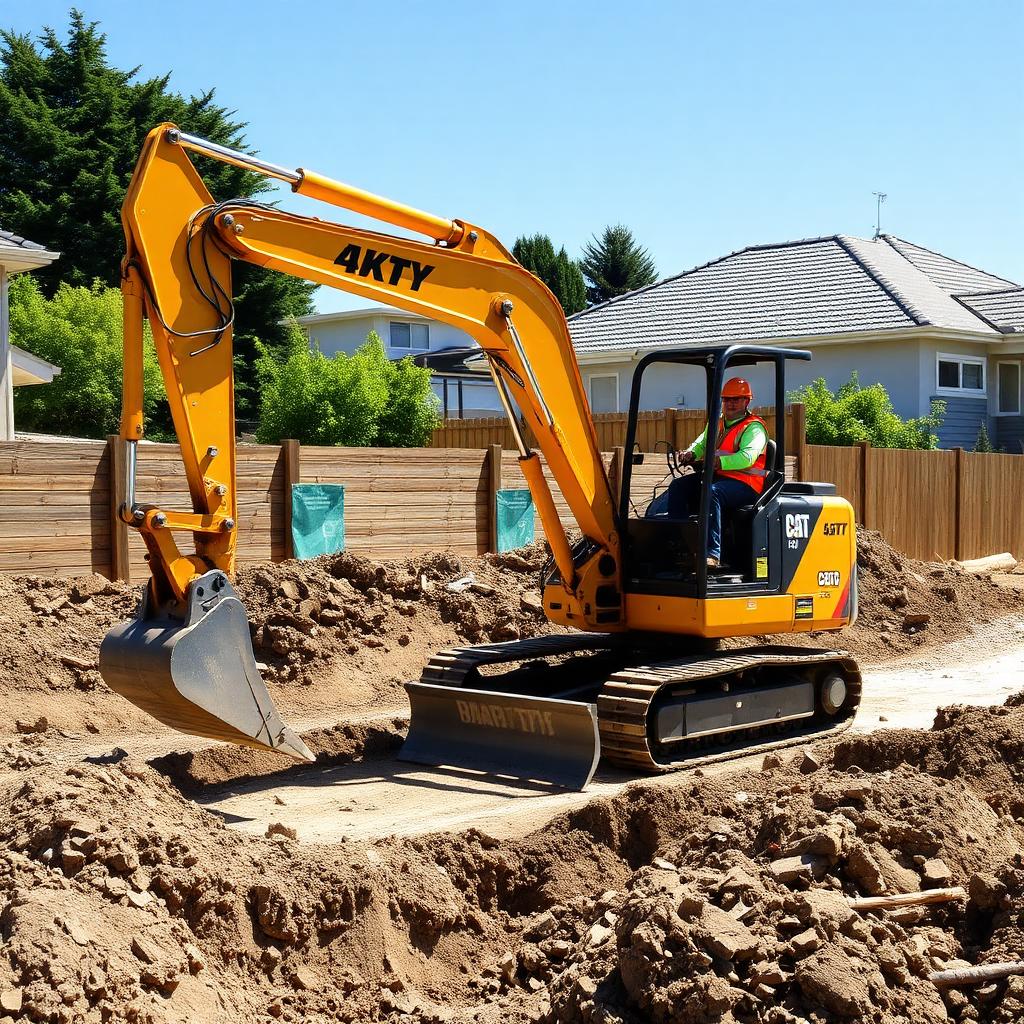
Wet hire is what most people mean by "get a digger in." You pay a contractor an hourly rate, they turn up with a machine that suits your job, an experienced operator drives it, fuel and insurance are in the price. You point at what you want done and they do it.
Dry hire is renting the machine from a hire yard. The hourly rate is lower because you provide the operator — usually yourself. Fuel is on you, damage is on you, transport to and from site is on you, and the judgement calls about how to actually do the job are on you.
— What Wet Hire Actually Includes
It is easy to look at $90 an hour and think you are just paying for a machine. You are not. Wet hire is:
The machine matched to the job. Fuel. Full insurance. An operator who has spent thousands of hours in the seat and knows what the ground is telling them. Delivery and pickup. The judgement calls that make the difference between a job done once and a job done twice.
The last one is the point of wet hire. An operator reading ground conditions, spotting a service before the bucket goes through it, knowing when to change tack because the soil below is different to what the plan said — that is where the value sits.
— NZ Market Rates in 2026
Wet hire in NZ typically sits at $90 to $120 per hour in 2026 for a standard residential-sized machine and operator. Machine and operator packages across all sizes benchmark $80 to $150 per hour — smaller machines and simple work at the lower end, larger plant, tiltrotator work or specialist jobs higher.
Dry hire rates from hire yards look cheaper at first glance — around $300 to $600 per day for a 3 to 5 tonne machine, plus fuel and transport. Six hours of dry hire looks like $50 an hour on paper. Then you add up what is not on the invoice.
— The Real Cost of Dry Hire
Sticker price is not the whole story. Real cost of dry hire includes:
Your time. A job an experienced operator finishes in a day takes an untrained driver two or three, and every one of those days is a day off work or off other things.
Damage risk. Fences, driveways, boundary pegs, garden beds, and — the expensive one — buried services. Hitting a stormwater line or a fibre cable turns a weekend project into an insurance claim.
Insurance excess. Hire yard damage waivers cap your exposure but rarely eliminate it. A tipped machine or a broken screen is still a real bill.
Ground judgement. Knowing where the fall goes, how much material you actually have to shift, whether the batter you're leaving will still be there after rain — that is experience, and it is not on the machine.
The re-do. The most expensive part. A driveway base done to the wrong fall has to come up and go back down. A pool hole dug 100mm off has to be re-worked. A trench that collapses has to be re-cut.
— When Dry Hire Genuinely Makes Sense
Not every job needs a professional operator. Dry hire is a real option when:
The job is simple and forgiving — spreading a load of metal on a flat drive, back-blading a paddock, rough clearing where the exact finish does not matter. You have run a machine before, ideally recently, and you have run one of about that size. There are no live services within the working area. No neighbours, no boundaries, no retaining involved.
If the job is anything more than that — foundation, drainage, driveway base, pool hole, tight access, near a boundary — wet hire is the right answer nine times out of ten.
— What a Good Operator Does That You Cannot
Reads the ground. Notices when the material changes and adjusts before it becomes a problem. Works to laser levels for foundation and driveway bases so the finish is right first time. Protects services by feeling with the bucket, not by hitting them. Leaves the site tidy — stockpiles in the right place, drives clear, machine tracks not chewing up lawn that has to stay.
None of this is on a machine spec sheet. It is what you actually pay for when you hire an operator.
— Sample Job, Priced Both Ways
Backyard levelling job, roughly a day's work for an experienced operator on a 5-tonne machine.
Wet hire: 8 hours × $110/hr = $880 all-in. Machine, operator, fuel, insurance. Delivered, done, gone.
Dry hire, if it goes well: $450 machine hire + $80 fuel + $200 transport = $730 direct cost. Add two days off work for someone who has not run one before and it is $1,300+ before anything goes wrong.
Dry hire, if it goes badly: add a re-do because the level is off, or a service strike, and it can pass $2,500 quickly.
For most residential jobs, wet hire is not the more expensive option — it is the more predictable one. See our detailed excavation service for the kind of work where an operator earns their rate, and the 2026 pricing guide for how projects get costed overall.
— Getting a Price
If you're weighing up a job that might be big enough to need help, get us on site. Free visit, we tell you honestly whether it is a wet hire job or a genuine DIY, and if it's wet hire you get a fixed quote before anything starts. See bulk excavation for larger site work and detailed excavation for precision jobs.
— FAQs
How much is digger hire with an operator in NZ?
Wet hire in 2026 typically runs $90 to $120 per hour, with machine and operator packages ranging $80 to $150 per hour depending on machine size and job type.
Do I need a licence to dry hire a digger?
Generally no on private land, which is exactly why damage from inexperienced operators is common. Skill matters far more than a piece of paper here.
Is wet hire cheaper in the end?
For most residential jobs, yes. Once you count your time off work, damage risk, insurance excess and re-do cost when it goes wrong, wet hire almost always wins on total spend.
What size digger comes with wet hire?
Whichever size matches the job. Choosing the right machine is part of what you're paying an operator to know — too small takes days, too big cannot get in the gate.
How do I get a price?
Free site visit, fixed quote. We look at the job, tell you what machine it needs, and give you a number before anything starts.