
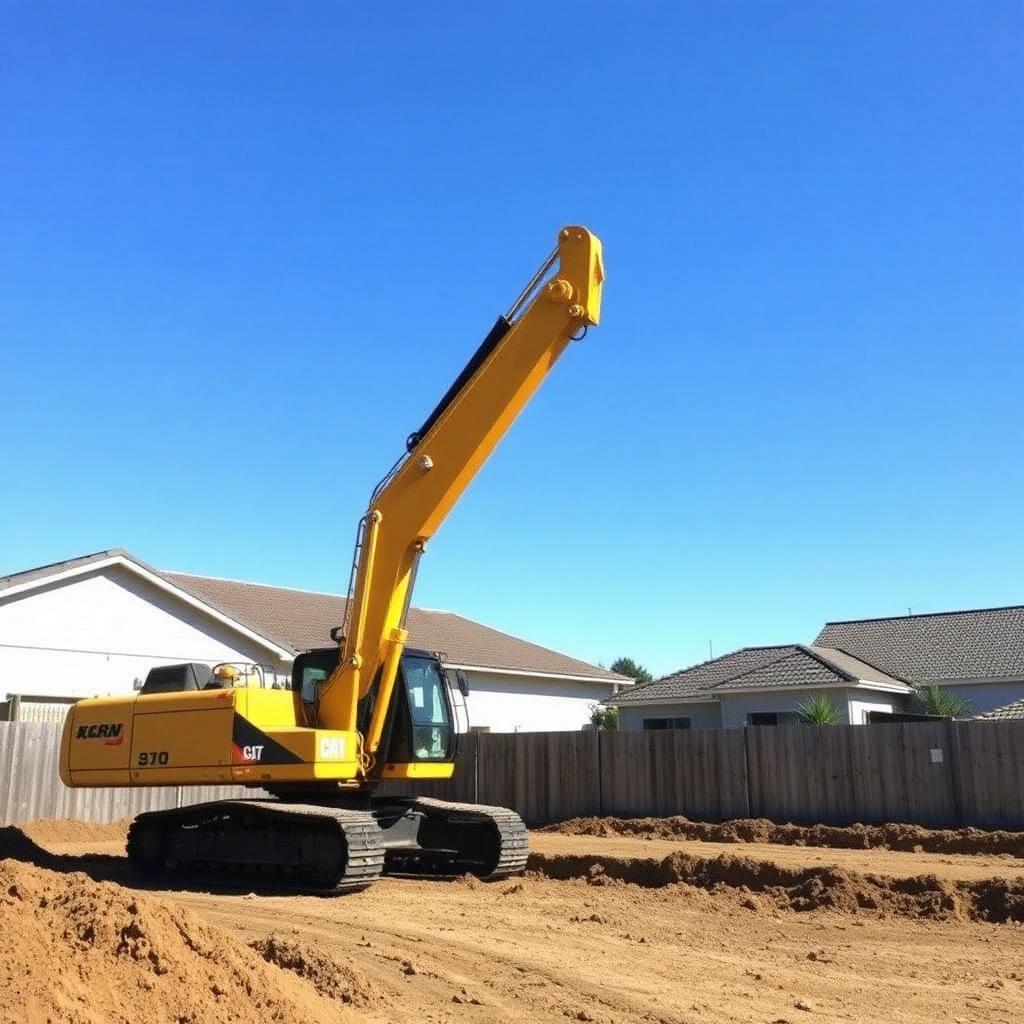
Section Levelling Cost in NZ: What Flattening Your Backyard Actually Costs
What section and backyard levelling costs in NZ in 2026: prices by yard size, cut and fill explained, when levelling needs retaining, and what is in a quote.
Levelling a backyard sounds simple — take the high bits off, put them on the low bits, done. Sometimes it is that simple. Often it's not, and the difference between "$2,000 job" and "$8,000 job" is decided by things people don't think about until the digger's already on site. Here's what section levelling actually costs in NZ in 2026 and what makes the number move.
— What Levelling Costs
Standard residential section levelling in NZ in 2026 typically runs $1,500 to $6,000. Small flat backyards that just need a bit of grading sit at the lower end. Sloped sections that need cut, fill, retaining and drainage sit at the upper end, and can pass $10,000 once retaining is significant.
On a per-cubic-metre basis, excavation benchmarks at $80 to $150 per cubic metre — bulk work at the lower end, detailed and tight-access work at the higher end. See our 2026 excavation pricing guide for how different job types are priced.
What's inside those numbers: machine, operator, fuel, insurance, and normal spoil handling on site. What's often not: cart-away of surplus material, retaining walls, drainage, and reinstatement of lawn or paving. Those are quoted separately, and they're where the surprises live.
— Cut and Fill, Explained Plainly
Two terms you'll hear on any levelling quote:
Cut is the material you take out — the high side of the section, or the bit you want to lower to make level.
Fill is where that material goes — the low side, or the bit you want to raise.
A "cut and fill" job balances the two: the material from the high side fills the low side, so there's little or no spoil to cart away. This is the cheapest way to level a section when it works — one machine, one day, minimal trucking. Simple example: a backyard with a slope from back fence to house drops 400mm across a 10-metre lawn. Cutting the back half down 200mm and filling the front half up 200mm brings it level and moves everything within the site.
A "full cut" job takes all the excess out to leave a lower platform, and the material goes to a disposal site by truck. Cost jumps significantly because you're paying for the trucks and the disposal on top of the digging. Sometimes there's no choice — if the low side is fine as it is and only the high side needs lowering, everything has to go.
— When Levelling Needs Retaining
Any meaningful level change that has to be held back needs a retaining wall. A gentle batter can hold small transitions — a 300mm change over a couple of metres of slope will usually stay put. A vertical step, or anything much more than that, needs structure.
Retaining sits on top of the levelling cost, not inside it. Standard timber walls sit at the lower end of the retaining pricing scale, block and structural walls higher. Every wall needs drainage behind it — always, regardless of type. See the 2026 retaining wall cost guide for detail on wall pricing and our retaining walls service for how walls and drainage come as one scope.
The mistake is scoping a levelling job without the retaining. "Just level it" for $3,000 becomes "$3,000 levelling plus $8,000 wall" as soon as the ground can't stand on its own. Better to know that number before the quote is signed than after the cut is open.
— Sandy vs Clay Sections
Ground type changes both the digging and the finishing.
Sand moves fast — a machine can shift a lot of material in a short day. But sand doesn't compact the same way as clay: fill areas need to be built up in lifts and compacted properly, or the fill side of a cut-and-fill lawn settles over the next year and you end up with a low patch where the fill was. Sand also needs retaining more often than clay, because sand cuts don't hold vertical.
Clay is slower to dig — the bucket has to work harder — but it holds its shape and compacts well. Cuts can stand steeper without retaining, and fill areas stay put once compacted.
Net effect: levelling on sand is often not cheaper than on clay by the time everything's counted. The digging is faster; the retaining, drainage and compaction fill the gap back in.
— What's in a Quote and What's an Extra
A complete levelling quote should be clear on all of the following. If it's silent on any of them, ask.
Spoil cart-away. The classic surprise. If the quote doesn't say cart-away is included and the site can't absorb the excess, you'll get a bill for trucking at the end. Always confirm.
Retaining. Any wall needed to hold the finished levels — priced separately as a wall scope, not folded into the levelling number.
Drainage. If drainage is needed to keep the finished levels dry — soakpits, subsoil drains, or discharge to an existing system.
Compaction. On any fill area, compaction to the right density in lifts. If it's not specified, the fill may not be doing what you want it to.
Reinstatement. Grass seed, topsoil, and any hard surface repair. Ask specifically what the finished state is.
— DIY vs Digger and Operator
Levelling is exactly the kind of job that looks like a good DIY dry hire and often isn't. Levels are what experience gets right — reading a slope, working to a set of pegs, knowing when compaction is enough. A backyard levelled 100mm out from where it was meant to be is a backyard that either has to be re-done or lived with. See our digger hire comparison for the full wet vs dry hire numbers.
For a simple bit of back-blading on flat ground, dry hire can be fine. For anything with a real level change, get an operator on the machine.
— Getting a Real Number
Backyard size, current slope, whether retaining is likely, and where the machine can get in — those four things get us to a range on the phone. A free site visit locks the number down and confirms what's included. See our bulk excavation service for larger site levelling and the sloped section earthworks guide if your project is bigger than a backyard.
— FAQs
How much does it cost to level a backyard in NZ?
Standard residential levelling typically runs $1,500 to $6,000 in 2026 — small backyards at the lower end, sloped sections with retaining at the upper. A free site visit gives the real figure.
Can you level a section without retaining?
Small transitions, yes — a shallow batter can hold on its own. Real level changes need retaining with drainage or the ground will move over time.
How long does levelling take?
Most backyard levelling jobs complete in one to two days. Larger sections or jobs that include retaining and drainage take longer.
Is levelling cheaper on sand?
Digging is faster on sand, but sand does not compact the same way as clay and often needs more retaining. The two effects often cancel out.
Do you take the spoil away?
Cart-away is priced upfront so there are no surprises. Always confirm the quote includes spoil disposal before comparing prices.