
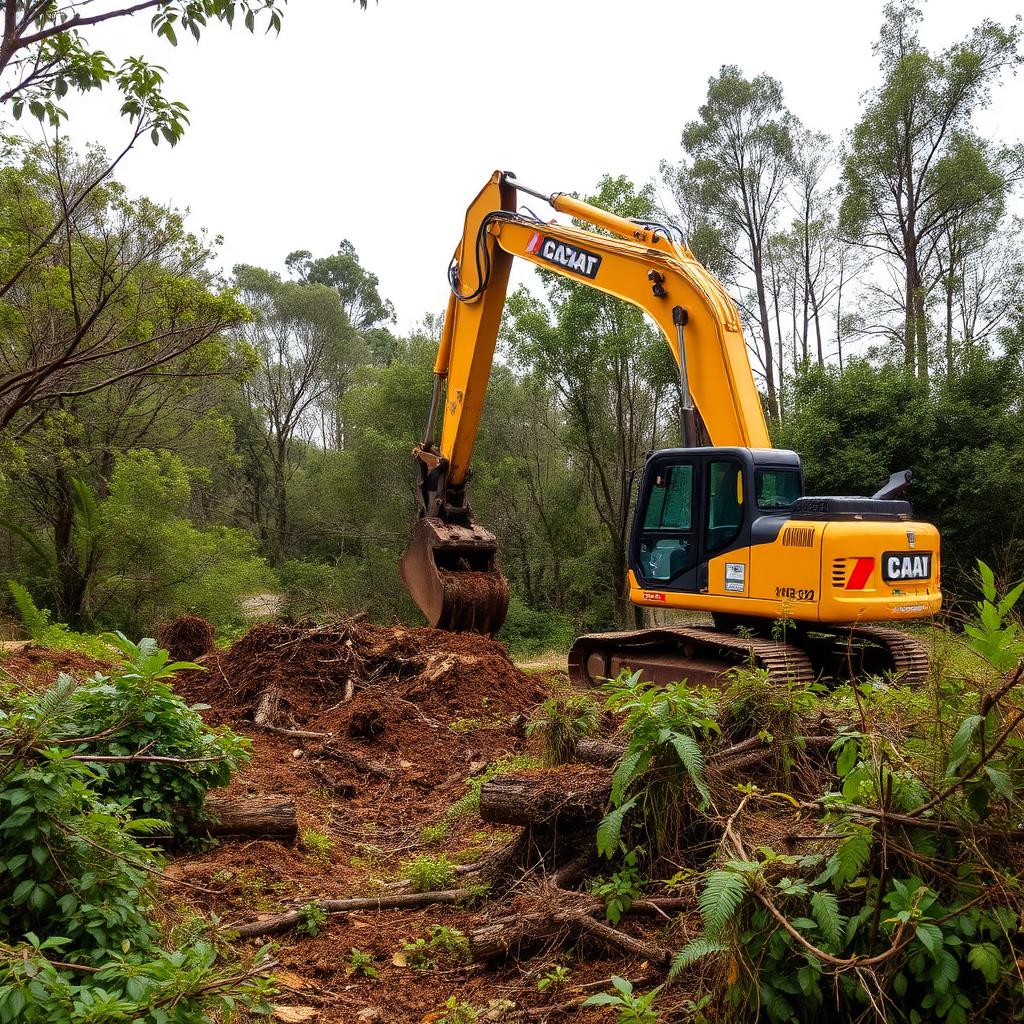
Section Clearing Cost in NZ: What Clearing Your Section Actually Costs
What it costs to clear a section in NZ in 2026 — vegetation, stumps, old structures and rubbish, what drives the price and what happens to the material.
"Clearing the section" is one of those jobs that looks simple from the front gate and gets complicated fast. Vegetation, stumps, old structures, twenty years of rubbish behind the shed — most sections are a mix of all of them. Here's what section clearing actually costs in NZ in 2026 and where the numbers move.
— What Clearing Covers
The catch-all "section clearing" usually means some or all of the following:
Vegetation and scrub — overgrown grass, blackberry, gorse, small trees and undergrowth.
Trees and stumps — anything from single trees to shelterbelts, plus what's underground.
Old structures — sheds, chicken coops, old tanks, disused fencing. Full house demolition is a separate scope covered in the house demolition guide.
Accumulated rubbish — old iron, timber, tyres, whatever's been dumped over the years.
Topsoil strip — removing the vegetated top layer to reveal what's underneath. This is usually stage one of a new build.
Most quotes are a mix. Ask for the components broken out so you know what's driving the cost.
— What It Costs
Standard residential section clearing in NZ in 2026 sits within the $1,500 to $6,000 band that runs through most residential earthworks. Small clears — a garden gone wild, a bit of overgrown fenceline — sit at the lower end. Heavy clears with big stumps, structures or serious cartage push through the top.
For hourly-priced work, machine plus operator sits within the standard $80-$150/hr band — see the 2026 excavation pricing guide for how that band applies across job types.
— The Three Cost Drivers
Volume to remove. Trucking is the silent cost. Machines are cheap compared to cartage — every truckload off site is a trip you're paying for. A section with three trailer-loads of rubbish clears fast on the machine and takes half a day of driving. Plan the disposal, or the disposal plans your day.
Stumps. Root systems on mature trees are bigger than the tree above ground. A pine that took an hour to fell can take another two hours to properly dig out. Leaving roots in ground you're about to build on is a mistake — they rot, they leave voids, and the ground moves.
What the material is. Clean fill, mulch, green waste, mixed rubbish and demolition waste all cost different rates to dispose of. Mixed loads cost more than sorted ones. Sorting on site while clearing is worth the time.
— Stump Reality
Two options: grinding or digging out.
Grinding chews the top of the stump down to below ground level with a rotary cutter. Fast, cheap, but leaves the root system in the ground. Fine for a lawn or garden. Not fine for anywhere you're building.
Digging out removes the whole root ball with an excavator. Slower, more expensive, more spoil to deal with. Non-negotiable under a future building platform.
The wrong choice here shows up two years later as a sunken lawn or a cracked slab. Match the method to what's going on top.
— Where the Material Goes
Green waste gets mulched on site where possible, or carted to green waste facilities.
Clean fill — dirt, subsoil, stone — often gets reused on the same site if there's a low area, saving cartage both ways. Where it can't stay, it goes to a clean fill site cheaper than mixed waste.
Mixed rubbish and demolition waste gets sorted where practical (metal, timber, general) and disposed of at appropriate rates. Recycling what can be recycled is cheaper than dumping.
— Before the Builder Arrives
For a new build, clearing is stage one of site prep, not a standalone job. The sequence is clear-strip-set out-cut-fill-compact. See our site preparation service for how it fits together, and the section levelling guide for what comes next.
— When Clearing Needs Care
Protected trees on the section — check the district plan before removing anything mature. Boundary vegetation shared with neighbours needs a conversation first. Anything that looks like it might be historic (old bottles, foundations, unusual structures) — pause and check. A ten-minute call is cheaper than an archaeological discovery.
— Getting a Real Number
Section size, what's on it, how much needs to come off site, and where the machine can get in — those four things get us close. See our bulk excavation service for section-scale clears and demolition and site clearance when structures are part of the job.
— FAQs
How much does it cost to clear a section in NZ?
Typical residential section clearing sits in the $1,500-$6,000 band in 2026. Heavy vegetation, structures or big cartage push it beyond that.
Does stump removal cost extra?
Stumps are the most underestimated part of clearing. Roots can turn a small tree into a real excavation job. Priced by count and size.
Can cleared material stay on site?
Clean fill and mulch often can — saves cartage in both directions. Rubbish and mixed waste has to go.
Do you clear sections before new builds?
Yes — clearing plus topsoil strip is stage one of site preparation for a new build.
Can you clear around trees I want to keep?
Yes. Protection zones marked out before the machine starts, and the operator works around them.