
Post Holes and Footings: What Drilling and Digging Them Costs in NZ
What post holes and footings cost in NZ in 2026 — deck piles, fence posts and foundation footings, auger sizes, depths and what drives the price.
"Post holes" is one of those phrases that covers three completely different jobs. Fence line, deck piles, structural footings — same words, different depths, different tolerances, different prices. Here's what each actually costs in NZ in 2026 and what makes the number move.
— The Three Jobs People Mean
Fence posts. Shallow, forgiving, high count. A boundary fence run is often 20-plus holes at a consistent depth, and the value is in getting through them fast without wandering off the line.
Deck piles. Deeper, straighter, and the depth is set by the deck plan. Get one pile short and the whole deck sits wrong. Engineered decks specify depth and diameter — we drill to that.
Structural footings. Always to plan, often inspected before pour. This is anything holding a building up: pole sheds, garages, small structures on piles. Depth and diameter are non-negotiable and the paperwork matters as much as the drilling.
Quoting all three the same way is how people get burned. Ask upfront which category your job sits in.
— How Machine Augering Works
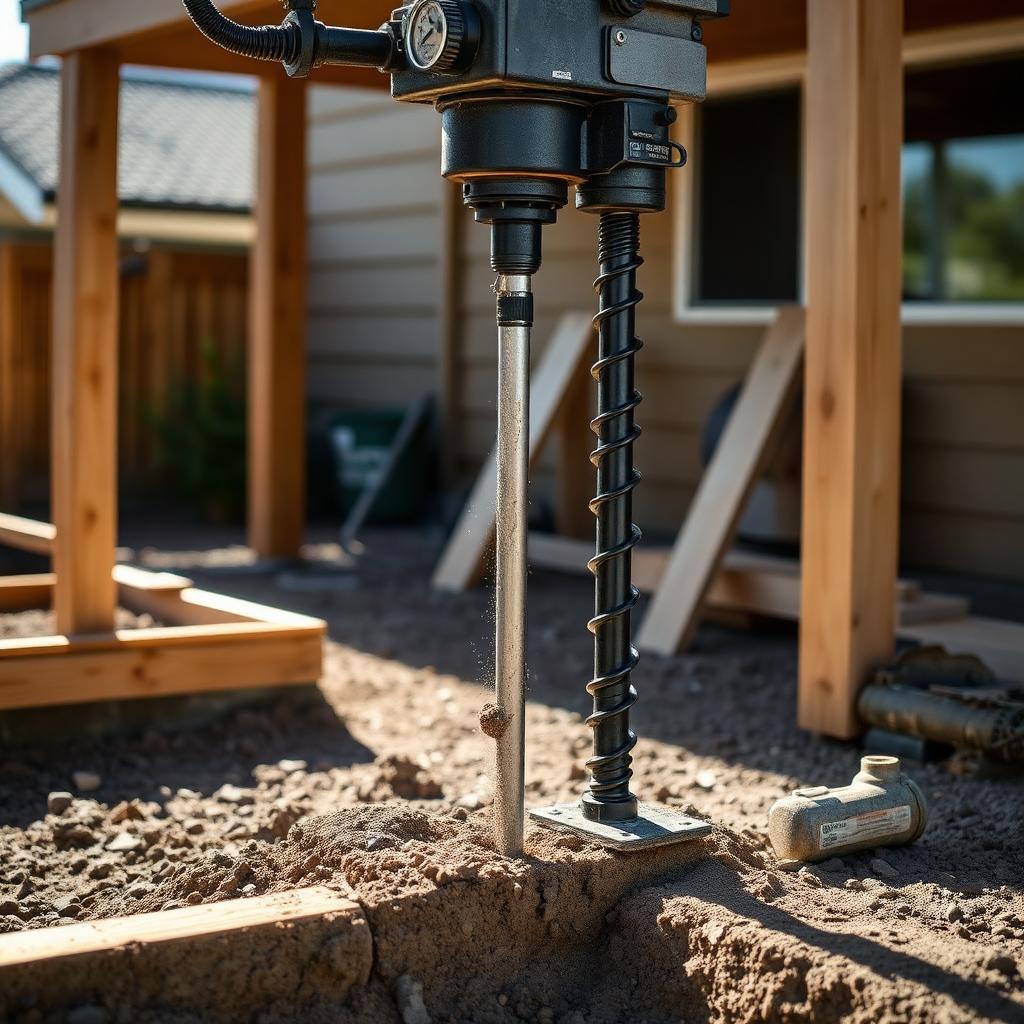
An auger head sits on the front of an excavator or a dedicated post hole rig. Hydraulic drive spins the flight, cuts the ground, lifts the spoil out. Different auger diameters for different jobs — 200mm for fence posts, 300-450mm for deck piles, bigger again for engineered footings. Swap-out on the machine takes a couple of minutes.
Past the first two or three holes, machine augering beats hand digging on every measure: speed, consistency of depth, straightness of the hole, and how the operator feels at the end of the day. Hand-dug holes wander, get shallower as the day goes on, and cost more in labour than the machine ever would.
— What It Costs
Two ways this gets priced:
Per hole. Setup — getting the machine to site, offloading, moving to first hole — is a fixed cost. Spread over one hole, it's expensive. Spread over 20, the per-hole rate drops a lot. That's why a single post hole quote can look surprising and a full fence line quote looks reasonable.
Hourly. Machine plus operator sits within the standard $80-$150 per hour band that runs through most of our excavation pricing guide. Bigger machines and specialised augers sit at the upper end.
For anything over half a dozen holes, hourly usually beats per-hole. For a single pile in a backyard, per-hole is honest — you're paying for the trip, not the hole.
— Depth Matters, and It's Not Guesswork
Fence posts are usually a third of the post buried — a 1.8m fence sits on a 600mm hole. Deck piles go past topsoil into firm bearing, and depth depends on ground type: sandy Papamoa sections often need deeper piles than clay Bethlehem sections to hit the same bearing. Engineered footings are whatever the engineer says, and inspected before the pour.
The pattern: on structural work, always to the plan, never to a rule of thumb.
— Ground Matters
Sand wants to collapse. A hole drilled at 9am in Papamoa sand can be half full of loose sand by noon. Case for drilling and pouring the same day, every time — see the sand building guide for the full picture.
Clay drills clean and holds shape. Slower to get through, but the hole sits open for days if it has to.
Rock or old concrete is the surprise. Old driveways, buried foundations, band of rock in the Kaimais foothills — hits the auger and progress stops. This is the "why is my quote suddenly more?" moment. A pre-drill site visit picks most of it up; some only shows up once the auger's in.
— When Footings Need Engineering
Anything structural — a house, a garage on piles, a big pole shed, a retaining structure — needs an engineer's design and often council inspection before pour. What that means practically: you have a drawing showing pile depth, diameter, reinforcement and concrete spec, and we drill to it. An inspector may want to see the hole before concrete goes in.
The cost of doing this right is small. The cost of a footing that fails inspection or, worse, moves under the finished building, is enormous.
— Why Holes Fail
Wrong depth (guessed, not measured). Water sitting in the hole before pour (concrete doesn't set through standing water). Spoil piles left where the concrete truck needs to be. Wrong diameter for the reinforcement. All avoidable, all common when the job is priced too low or rushed.
— Getting a Real Number
Tell us the count, the job type, the ground and the access, and we'll get you a real number. See our augering and drilling service, and if the job pairs with foundation or trench work, our detailed excavation service covers the rest.
— FAQs
How much does post hole drilling cost in NZ?
Priced per hole or hourly within the standard $80–$150/hr machine band. Per-hole gets cheaper as the count goes up because setup is a fixed cost spread over more holes. A site visit gives the real number.
How deep do deck piles need to go?
To the plan — typically past topsoil into firm bearing ground. On structural decks the engineer specifies the depth; we drill to that, no guessing.
Can you drill post holes in sand?
Yes — the trick is drilling and pouring the same day so the hole can't collapse or fill with water before the concrete goes in.
Machine auger vs hand digging?
Machine wins past a couple of holes on speed, consistency and straightness. Hand digging is fine for one or two, painful for twenty.
Do you clear the spoil?
Yes — spoil handling is part of the quote. You shouldn't be left with piles of dirt around every hole.