
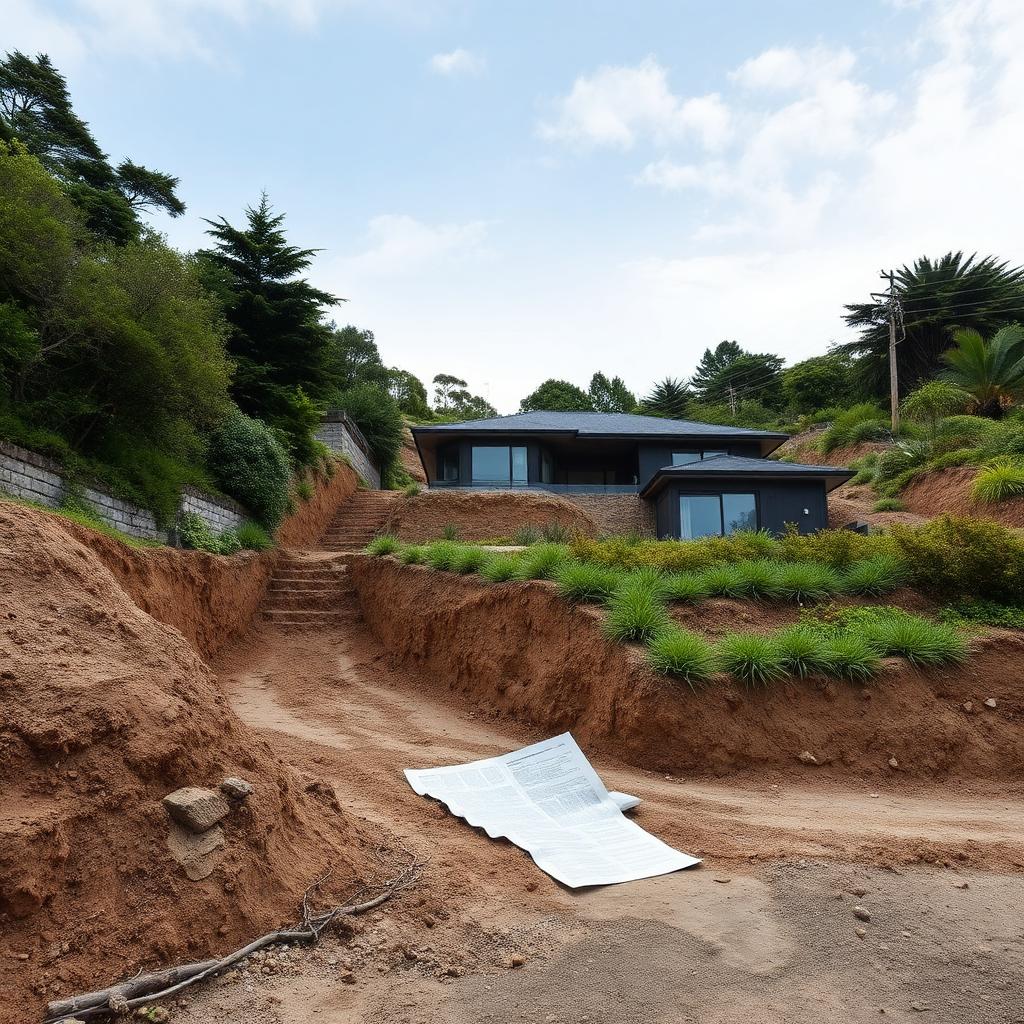
Do You Need Consent for Earthworks in Tauranga? The 2026 Rules Explained
When earthworks need consent in Tauranga: permitted volumes, the retaining wall 1.5m rule, resource consent costs and timeframes, explained in plain English.
Consent is the part of an earthworks job most people know least about — and it is where the biggest programme surprises come from. This guide covers when earthworks need consent in Tauranga in 2026, in plain English, without pretending the rules never change. Council specifics move around, so treat the numbers below as general guidance and always confirm against the current Tauranga City Plan for your specific site.
— Two Types of Consent, in Plain English
Building consent is issued under the Building Act. It covers structural work — including retaining walls above a threshold, drainage, foundations. If you're doing something that has to stand up safely and comply with the Building Code, this is the consent you need.
Resource consent is issued under the Resource Management Act, through the City Plan. It covers the effect of what you're doing on the land, neighbours and environment — earthworks volume, cut and fill heights, working near boundaries, waterways or protected areas. Even work that does not need a building consent can need a resource consent.
Some jobs need both. Some need one. Some need neither. The only way to know is to check the specific site against the current rules.
— When Earthworks Are a Permitted Activity
Modest residential earthworks are often permitted under the Tauranga City Plan — meaning no resource consent is required, provided the work stays within the permitted volumes and cut/fill heights for the zone. Thresholds vary by zone and by any overlays that apply to the site (flood-prone, coastal, heritage, geotechnical risk), so a number that applies in one suburb may not apply in the next street.
Rather than quote a specific volume threshold that dates fast, we confirm the applicable rule for each site by checking the current City Plan when we quote. If your job is comfortably inside the permitted limits, we say so. If it is borderline or over, we flag resource consent early so the programme can absorb it.
— The Retaining Wall Rules Everyone Should Know
Two rules matter here, and the second one catches people out constantly:
Walls over 1.5m in height need building consent. That is a firm threshold in the Building Act. Under 1.5m of retained height, and no surcharge, a wall can often be built as exempt work — subject to the exemption details in Schedule 1.
Walls of any height supporting a surcharge need engineering input. A surcharge is any additional load above the wall — a driveway, a building, a slope above, a vehicle turning area. A 900mm wall holding back a driveway is not the same as a 900mm wall holding back a lawn. The driveway wall almost certainly needs engineering, and possibly consent, even though it's well under 1.5m. This one gets missed regularly and turns into an expensive fix later.
Our retaining walls service covers the engineering and consent side as part of every wall we build. See the retaining walls guide for detail on when engineering and consent kick in.
— Special Overlays That Change the Rules
Even a small job can need consent if the site sits under an overlay. The main ones in Tauranga:
Flood-prone areas. Cut and fill in a flood plain has stricter rules — because raising ground on one section can push water onto another.
Coastal areas. Erosion setbacks and coastal environment provisions apply. Even permitted-volume earthworks can trigger consent close to the coast.
Mana whenua and heritage areas. Sites of significance to iwi, archaeological alerts and heritage buildings all change what can be done and how.
Steep land and instability overlays. Ground that has been identified as slip-prone or geotechnically sensitive triggers more scrutiny — and often geotech reporting as part of any application.
These overlays are visible on the council mapping tools. We check them at quote stage as a matter of course.
— What a Resource Consent Involves
If a resource consent is required, expect:
Cost. Straightforward controlled activities typically come in at a few thousand dollars including planner fees, plans and the council lodgement fee. Notified consents or complex applications can be well beyond that.
Timeframes. Weeks, not days. The statutory clock is a target, not a guarantee, and requests for further information stop the clock. The practical rule is start early — do not schedule the digger before you know the consent is in hand.
Documentation. Site plans, cross-sections, drainage and sediment control details, geotech assessment where required. This is the planner's and engineer's work, not the excavator's — but the earthworks scope has to be locked in before those plans can be finalised.
— Who Handles the Consent Side
Peard is your earthworks contractor, not your planner. What we do is flag what's needed early, work to plans the consented scope requires, deliver sediment control and site management to conditions, and provide as-built records where they're needed at the end. On drainage work, our registered drainlayer handles the building consent side of the drainage specifically — see the drainage requirements guide.
For a resource consent application, you'll work with a planner or your designer. We coordinate with them so the earthworks details in the application match what we're actually going to build.
— Get the Consent Question Answered Early
The programme risk on earthworks is almost always in the paperwork, not the digging. A Site Feasibility Assessment is the fastest way to get the consent question answered before you commit to a section or lock in a build programme. Fixed fee, written report, no surprises later. See our site preparation service for how we sequence a full new-build site once consent is sorted.
— FAQs
Do all earthworks need consent?
No — modest residential earthworks are often permitted under the City Plan. The site, its zone and any overlays decide, and Peard confirms it against the current Tauranga City Plan as part of every quote.
When does a retaining wall need consent?
Walls over 1.5m need building consent. Walls of any height supporting a surcharge — a driveway, building or slope above — need engineering input regardless of height. That second rule catches people out constantly.
How long does resource consent take?
Weeks rather than days. The exact time depends on the application and council workload, so the practical rule is start early — do not schedule the digger before consent is in hand.
What happens if you do earthworks without consent?
Council can require retrospective consent, engineering sign-off after the fact, or reinstatement of the site. Not worth the risk on any meaningful job.
Does Peard handle the consent side?
We flag what is needed at quote stage and coordinate with your designer, engineer or planner. We do not replace them, but we make sure nothing gets missed.