
Key Takeaways
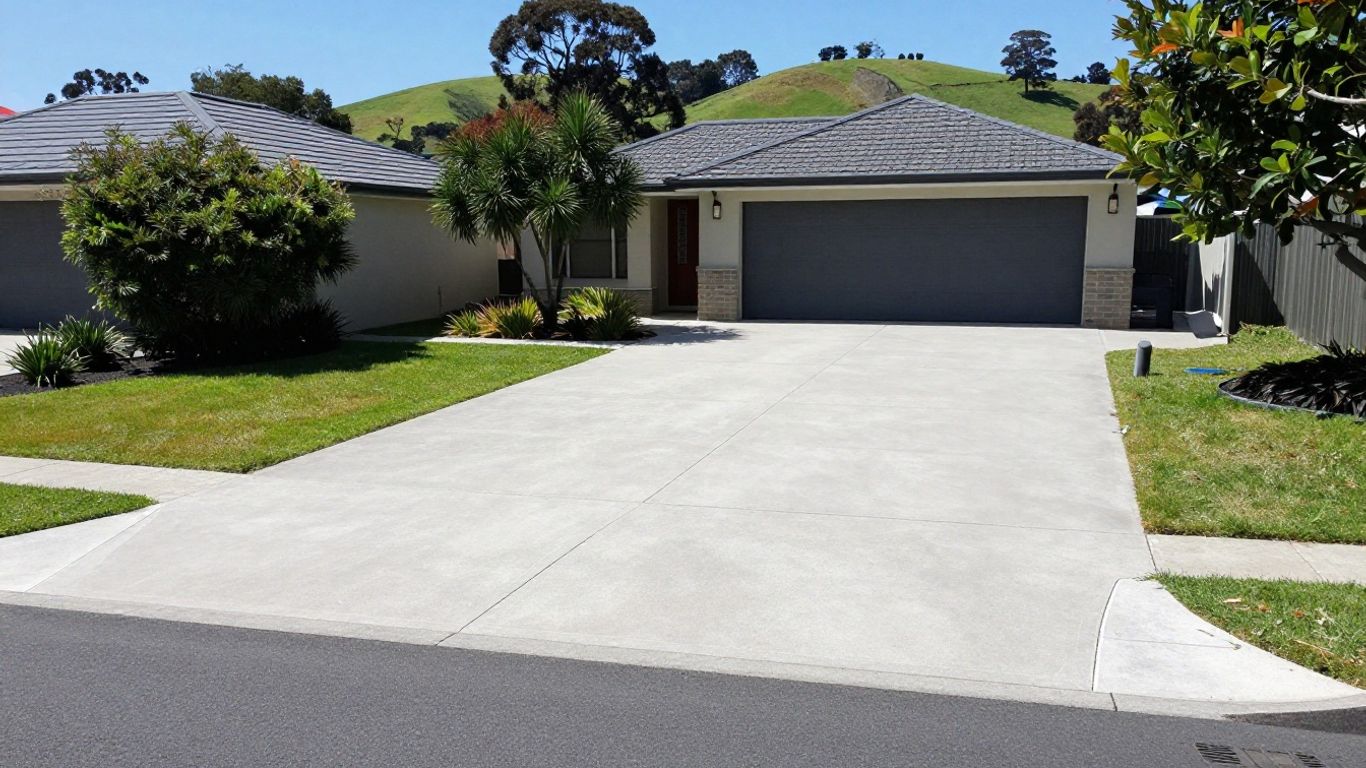
A concrete driveway budget in Tauranga depends on more than the concrete itself. Area, finish, access, ground conditions, drainage and council-related work can all change the final figure.
- Allow roughly $70–$150 per square metre for many standard concrete driveways, with premium finishes costing more.
- Small driveways can have a higher per-square-metre price because fixed preparation and delivery costs are spread over less area.
- Slopes, poor ground, demolition, spoil removal and restricted access are common sources of extra cost.
- A detailed, itemised quote is more useful than a low headline rate with unclear exclusions.
- Good drainage, a properly prepared base and suitable reinforcement matter more than choosing the cheapest finish.
What a concrete driveway costs in Tauranga in 2026
For a useful starting point, the concrete driveway cost Tauranga homeowners see in 2026 is often around $70–$150 per square metre for a standard project, including typical concrete placement but not every possible site extra. Decorative finishes, difficult access and substantial excavation can push the rate higher. Prices should be treated as planning figures rather than promises, because two driveways with the same surface area may require very different preparation. A concrete driveway pricing guide is useful for checking the broad New Zealand factors behind these estimates.
Typical cost per square metre
Plain broom-finished concrete generally sits toward the lower end of the range. Exposed aggregate, coloured concrete, stamped patterns and more elaborate borders add materials and finishing time, so they sit higher. Tauranga conditions can also affect the rate where the contractor needs to remove unsuitable soil, import compacted base material or work around existing drainage. The rate should always state whether GST, excavation, concrete pumping, boxing, reinforcement and disposal are included.
Small, standard and large driveway price examples
A compact single-car driveway might measure about 20–30 square metres, giving a broad surface-only planning range of $1,400–$4,500 before substantial site works and GST adjustments. A two-car driveway of roughly 40–60 square metres may sit around $2,800–$9,000 on the same basis. Larger driveways, turning areas and long accessways can exceed that range quickly, particularly when the work involves a long pour, steep access or significant spoil removal.
The examples below are deliberately broad. They help with early budgeting, but a site visit is needed before treating any number as a quote.
| Driveway type | Approximate area | Broad concrete pricing guide* |
|---|---|---|
| Single-car | 20–30 m² | $1,400–$4,500 |
| Double-car | 40–60 m² | $2,800–$9,000 |
| Extended or turning area | 70–100 m² | $4,900–$15,000 |
*These figures are indicative surface pricing only and may exclude GST, demolition, earthworks, drainage, crossings and premium finishes. The important takeaway is that a smaller project is not always proportionally cheaper: mobilisation, boxing and delivery still have to happen.
Labour, materials and GST considerations
A driveway quote usually combines concrete, reinforcing steel or mesh, formwork, placing, levelling, finishing and labour. The concrete quantity is only one part of the job. GST can make a noticeable difference, so check whether the quoted total is inclusive rather than assuming it is. Ask whether the price includes pump hire, cutting control joints, sealing, curing measures and removal of leftover material.
Material prices can also vary with strength, thickness, aggregate selection and delivery distance. The cheapest visible rate may not be the cheapest completed driveway if essential preparation appears later as a variation.
How Tauranga prices compare with wider New Zealand costs
Tauranga pricing broadly follows wider New Zealand residential driveway ranges, but local conditions can move a project above or below a national guide. Labour availability, concrete delivery logistics, wet weather, sloping sections and the cost of taking spoil away all matter. A flat, open section with good truck access may be straightforward; a narrow suburban site with a failing old driveway is a different proposition. Use national figures as a sense check, then rely on local, itemised quotes.
How driveway size and design affect the total price
The footprint is the first calculation, but it is not the whole calculation. Every extra square metre adds concrete, preparation and finishing, while awkward shapes add time even when the area is modest. The most reliable budget starts with a measured plan and a clear choice of finish. It also helps to decide early whether the driveway is for cars only or must handle trailers, vans or heavier vehicles.
Measuring the area and estimating concrete volume
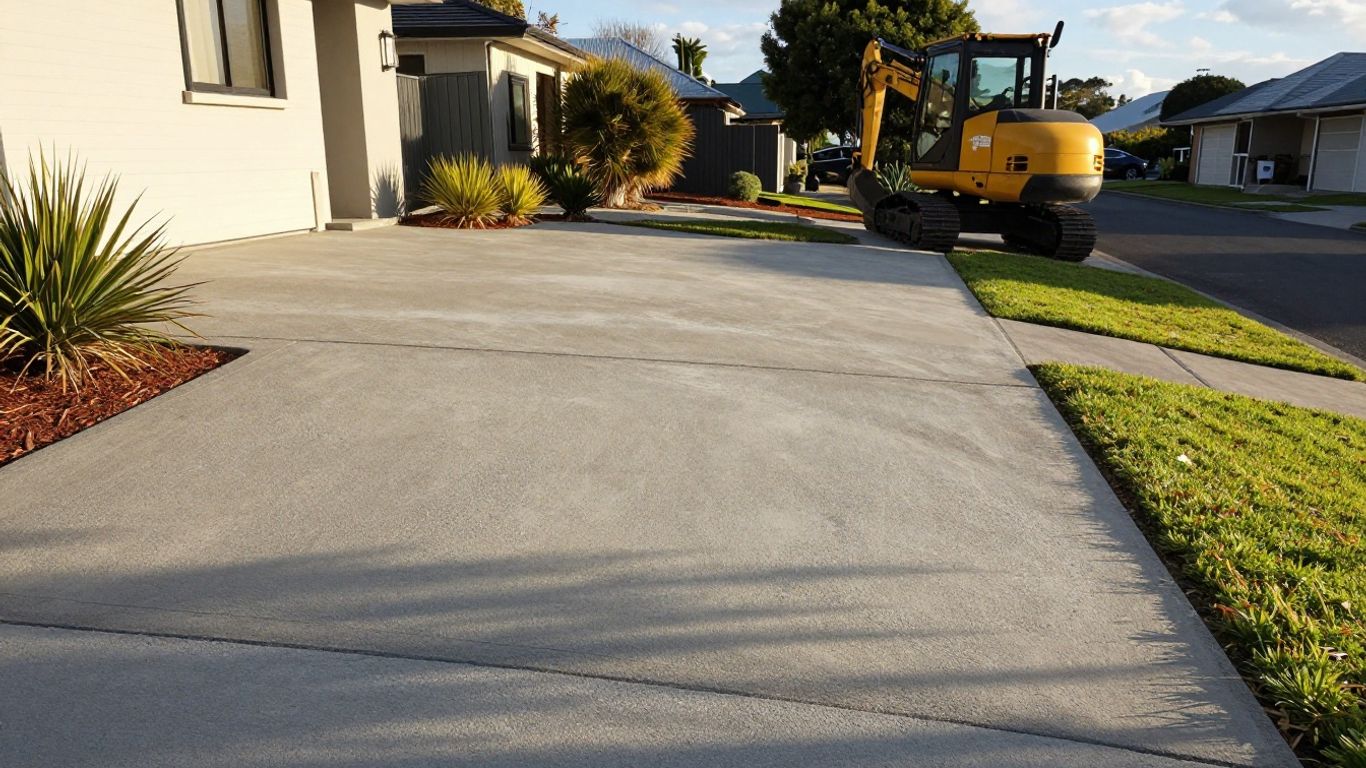
Measure each rectangular part separately, then add the areas together. For a simple slab, multiply the area by the planned thickness to estimate volume; for example, 50 square metres at 100 millimetres is about 5 cubic metres before allowing for practical ordering considerations. Contractors will confirm the final quantity and account for thickened edges, ramps and levels. A sketch showing boundaries, gates, garages and neighbouring paths can prevent misunderstandings.
Single-car, double-car and extended driveways
A single-car driveway may be economical in total, yet its per-square-metre cost can be higher because setup and delivery are fixed costs. Double-car layouts often make better use of one mobilisation and one pour, although they require more concrete and may need a wider vehicle crossing. Extended driveways and turning pads should be designed around how vehicles actually move, not just how much spare land is available.
Plain, exposed aggregate and decorative finishes
Plain concrete is usually the simplest finish to price and repair. Exposed aggregate offers texture and a broader visual range, while coloured or patterned finishes add design value at a higher rate. Sealing may be recommended to protect the surface and maintain its appearance, but it is another line item to clarify. Comparing finishes by appearance alone misses the effect of preparation, thickness and long-term maintenance.
Curves, slopes, borders and other design details
Curves require more formwork and careful finishing than straight edges. Slopes need accurate levels so water moves away from buildings without creating an uncomfortable or unsafe driving surface. Borders, steps, drainage channels and separate pedestrian paths all add interfaces where measurements must be right. A simple layout is often the best way to keep the concrete driveway cost Tauranga owners are planning under control.
Site preparation and ground conditions in Tauranga
Concrete performs best when it is placed on a stable, well-drained base. It is not a magic lid that hides a soft or poorly compacted site; movement underneath can lead to cracking, settlement or uneven edges. Tauranga properties vary considerably, and wet ground, fill, slopes and access can make preparation the largest part of the budget. Peard Excavation works across residential, commercial and rural projects, with excavation, site preparation and drainage handled as part of its documented service offering.
Excavation, levelling and removal of the old driveway
The existing surface may need to be broken out and removed before the new driveway is formed. Excavation then brings the area to the right level, allowing room for base course and concrete while protecting thresholds and adjoining surfaces. Spoil has to be loaded, transported and disposed of lawfully, and that cost depends on the material and travel involved. If an old driveway is sound and levels allow, retaining part of the existing structure may sometimes reduce work, but the contractor must assess it first.
Sub-base requirements for local soil and drainage
A compacted granular sub-base spreads vehicle loads and provides a more consistent platform for the slab. The required depth depends on ground conditions, expected use and drainage, rather than a single universal number. Water trapped beneath or beside the driveway is a recurring cause of trouble, so falls, outlets and connections should be considered before the concrete arrives. The Bay of Plenty driveway planning guide also highlights the importance of excavation, base course and correct grades in wet local conditions.
Managing slopes, soft ground and access limitations
A sloping section may need staged excavation, careful battering or temporary protection. Soft spots can require undercutting and replacement with suitable compacted material. Narrow entrances may prevent a truck from reaching the pour, creating extra handling or pump costs, while parked vehicles, fences and overhead services can limit machinery. These are practical site constraints, not minor details to discover on pour day.
When retaining walls or extra earthworks are needed
If the driveway cuts across a slope, a retaining wall may be needed to hold the ground above or below it. Wall height, surcharge from vehicles, drainage and footing conditions influence the design and price. Consent or engineering requirements may also apply depending on the wall and site. Earthworks and retaining work should be planned together, because building the driveway first can leave poor access for the work that follows.
Additional costs to include in your budget
A driveway project often connects with the public road, stormwater system and landscaping around the house. That is why a surface-only rate can look attractive while the completed project costs more. Prepare a budget with a contingency for unknown ground conditions, especially when the old surface is hiding fill or drainage problems. The goal is not to add unnecessary work, but to make the likely work visible before construction begins.
Kerbs, edging, paths and vehicle crossings
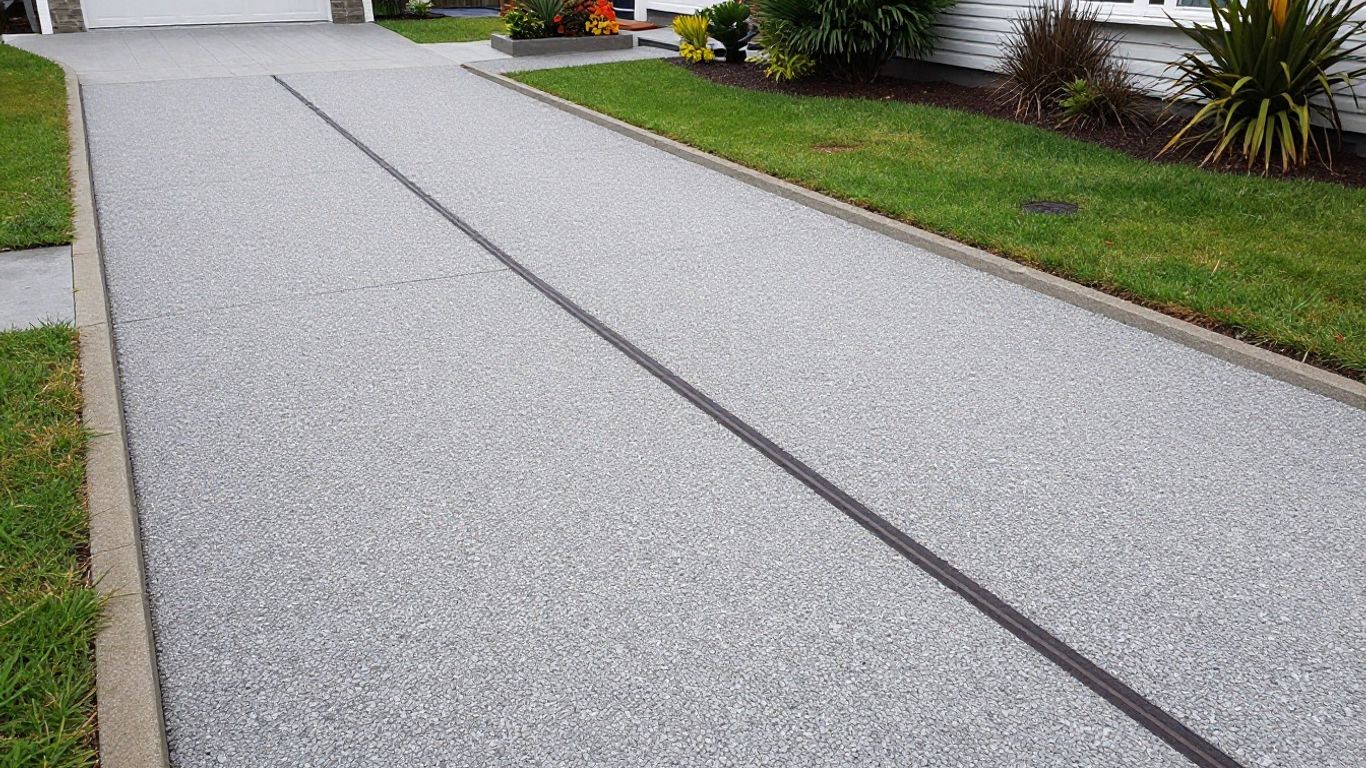
Kerbs and formed edges give the slab a clean boundary but require additional boxing and concrete. A path to the front door, widened entrance or vehicle crossing should be measured separately in the quote. Work within the road reserve may have different standards or approval requirements from work entirely inside the property. Confirm who is responsible for reinstating berms, footpaths or kerbing if they are disturbed.
Stormwater drainage and council requirements
Driveway levels should direct water safely rather than sending runoff toward a garage, neighbouring property or public footpath. Channels, sumps, grates, pipework and lawful discharge points can add cost, as can work needed to connect with existing systems. Tauranga drainage requirements deserve early attention; a drainage rules guide can help identify questions to raise before the contractor finalises levels.
Reinforcing mesh, thickened slabs and heavy-vehicle use
A driveway intended only for passenger cars may have different design requirements from one used by delivery vehicles, trailers, motorhomes or work trucks. Reinforcing mesh, thicker concrete, thickened edges and stronger sub-base construction may be appropriate, but they should be specified rather than added vaguely. Tell the contractor how the driveway will actually be used. Under-designing it to save a small amount upfront can create expensive repairs later.
Coloured concrete, sealing and decorative upgrades
Colour, exposed aggregate, saw-cut patterns and borders can make a driveway feel integrated with the house and landscaping. They also increase the number of materials, finishing stages and decisions that need to be coordinated. Ask for samples or examples viewed in natural light, and check whether sealing is included or recommended as future maintenance. Decorative work is easiest to budget when selected before the quote, not requested halfway through the pour.
How to get an accurate concrete driveway quote
Good quoting starts with good information. Send the contractor measurements, photos, a site sketch and a description of how the driveway will be used. Be open about the old surface, access problems and any known drainage issues. A contractor who has to guess will either add a risk allowance or return with variations when the ground is opened.
Information to provide contractors before quoting
Include the approximate area, preferred finish, desired access date and whether the driveway is replacing an existing surface. Photos should show the street entrance, garage threshold, side boundaries, slopes, drains and any tight access points. Mention heavy vehicles, retaining walls, nearby trees and services. If plans or a recent survey exist, supply those too.
Comparing itemised quotes from Tauranga contractors
Compare scope rather than just the final number. Peard Excavation’s documented work includes residential, commercial and rural excavation, drainage and retaining services, which are relevant when the driveway needs more than a concrete crew alone. An itemised quote should separate demolition, excavation, disposal, base course, reinforcement, concrete, finishing, drainage and reinstatement. This makes genuine differences visible and reduces the chance of comparing a complete scope with a surface-only allowance.
A useful comparison usually checks:
- The slab area, thickness and concrete specification.
- Excavation depth, base preparation and compaction.
- Reinforcement, formwork, joints, finishing and sealing.
- Drainage, vehicle crossing work, disposal and GST.
After reviewing those items, ask each contractor to identify exclusions and assumptions in plain language. That conversation is often more valuable than chasing a small difference in the headline price.
Questions about preparation, curing and workmanship
Ask how the base will be prepared, how levels and falls will be checked, and where control joints will be placed. Confirm the expected curing approach and when vehicles may return to the surface. You can also ask how changes in weather, unexpected soft ground or a shortage of access space would be handled. Clear answers show whether the contractor has thought through the whole job rather than only the concrete pour.
Checking insurance, guarantees and local experience
Check that the contractor carries appropriate insurance and can provide relevant examples of completed work. Ask who will actually manage and carry out the project, especially where excavation, drainage or retaining is involved. Local experience is useful because site conditions and council interfaces vary between suburbs. Written guarantees should be read carefully so you understand what is covered, for how long and subject to which maintenance requirements.
Tauranga consent and compliance considerations
Not every residential driveway needs the same approvals. Work inside a property may be relatively simple, while changes at the road frontage, stormwater connections or retaining structures can involve council requirements. The safest approach is to check early, before ordering concrete or fixing levels. Requirements can depend on the exact site, proposed work and connection details.
When a vehicle crossing may require council approval
A new or altered vehicle crossing generally interacts with the road corridor and may need approval or construction to council standards. The crossing can involve kerb, channel, footpath and berm work beyond the private driveway slab. Ask who will apply for approval, who pays associated fees and who reinstates damaged public assets. Do not assume that an existing crossing automatically suits a wider or repositioned entrance.
Stormwater flow and discharge requirements
The finished driveway must deal with rainfall without creating nuisance runoff or blocking established drainage. Falls, channels and discharge points should be shown in the plan, particularly on sloping sites or properties with flood-sensitive areas. Existing pipes may be undersized, damaged or located differently from old plans. Confirm the proposed solution with the relevant council or qualified drainage professional before construction.
Property boundaries, public footpaths and berms
A driveway can cross several responsibilities in a short distance: private land, the legal frontage, a berm, footpath and road. Construction access may damage grass, paving or kerbing even when the final driveway is well built. Establish boundaries and photograph existing conditions before work starts. This helps clarify reinstatement and avoids an argument about whether damage was pre-existing.
Confirming requirements with Tauranga City Council
Tauranga City Council is the appropriate place to confirm current requirements for vehicle crossings, stormwater, road reserve work and any consent questions. Ask for advice specific to the property rather than relying on a general online estimate. Keep copies of approvals, plans and inspection records with the quote. A few early calls can prevent a finished driveway from needing expensive alterations.
Ways to control the cost of a concrete driveway
Cost control works best before the excavator and concrete truck arrive. Decide what the driveway needs to do, simplify the layout where possible and obtain quotes on the same written scope. Do not remove preparation or drainage simply because they are less visible than the finish. The durable option is usually the one that manages water and ground movement properly.
Choosing the right finish for your budget
Plain concrete may be the sensible choice where the priority is a functional, clean surface. Exposed aggregate or colour can be limited to a border or entry feature if a fully decorative driveway stretches the budget. Ask about future sealing and cleaning before choosing a finish. A modest design with good edges and accurate levels can look better than an elaborate design compromised by poor preparation.
Scheduling work and preparing the site
Clear vehicles, garden furniture and loose items before the crew arrives. Arrange access for machinery and confirm where spoil, aggregate and concrete trucks can go. If demolition or landscaping is being done by others, coordinate the order so completed work is not damaged. Flexible timing may help the contractor choose suitable weather and combine efficient deliveries, but never rush curing to meet a convenient move-in date.
Reducing costs without compromising durability
Keep the shape straightforward, avoid unnecessary excavation and make decisions before the quote is accepted. Combine related earthworks where practical, but retain the base depth, drainage and reinforcement appropriate to the site and vehicle use. Get several comparable quotes, not several different guesses. Peard Excavation describes an in-house delivery model without subcontractors and a focus on transparent costing, which can be relevant when a project needs coordinated excavation and site preparation.
When the cheapest quote may create long-term risks
A low quote becomes risky when it omits disposal, compaction, joints, drainage or a clear concrete specification. Weak preparation can lead to settlement, ponding and cracks that are costly to correct once paths, gardens and fences are finished. Ask what the contractor has allowed for and what could trigger a variation. Saving money is worthwhile; shifting essential work out of the scope usually is not.
Conclusion
A Tauranga concrete driveway is best budgeted as a small construction project rather than a slab priced by area alone. Measure carefully, allow for preparation and drainage, check road-frontage requirements, and compare itemised quotes that describe the finished result. With those basics clear, you can choose a finish that suits both the property and the budget without being caught by avoidable extras.
Frequently Asked Questions
What is the average concrete driveway cost in Tauranga in 2026?
A broad starting range is about $70–$150 per square metre for many standard concrete driveways, before or excluding some site-specific extras. The completed price depends on access, excavation, drainage, finish, thickness, reinforcement and GST.
How much does a single-car concrete driveway cost?
A single-car driveway may cost roughly $1,400–$4,500 using broad surface-pricing estimates for around 20–30 square metres. Small jobs can have a higher unit rate because delivery, setup and preparation costs are spread over less area.
Is exposed aggregate more expensive than plain concrete?
Usually, yes. Exposed aggregate requires different materials and additional finishing work, so it commonly costs more than a plain broom finish. Sealing and decorative borders may add further expense.
Does removing an old driveway add to the price?
Yes. Breaking out the old surface, loading it, transporting it and disposing of the material are separate tasks. The cost depends on the old driveway’s size and thickness, site access and disposal requirements.
Do concrete driveways need reinforcing mesh?
Reinforcement may be appropriate depending on slab design, ground conditions and expected vehicle loads. It should be specified by the contractor or designer rather than assumed to be necessary, or unnecessary, for every driveway.
How long should a new concrete driveway cure before vehicles use it?
The contractor should provide a curing and vehicle-use timeframe suited to the concrete specification, weather and site conditions. Keep vehicles off the surface until that advice says it is ready, even if it appears hard on top.
Do I need council approval for a new driveway in Tauranga?
Possibly. A vehicle crossing, work in the road reserve, stormwater connection or retaining structure may involve approval or specific standards. Confirm the requirements for the property with Tauranga City Council before work begins.