Key Takeaways
Starting a new building project involves critical groundwork that determines long-term stability and future maintenance needs. These five points highlight how to navigate the earthworks landscape efficiently:
- Define site requirements early to identify specific excavation and clearing needs.
- Prioritize contractors who own their machinery to reduce cross-trade dependencies.
- Verify professional insurance and health and safety certification for every service provider.
- Assess local soil types, particularly volcanic variants, to manage foundation risks proactively.
- Clear communication regarding project contingencies and weather delays protects your budget and timeline.
Understanding the scope of your earthworks project
Every construction project begins with the ground underneath. Before bringing in heavy machinery, it is essential to define exactly what your site needs to reach the slab or subgrade stage. Whether you are dealing with a small residential backyard or a multi-lot subdivision, clear objectives prevent the initial phase from ballooning in cost or duration.
Identifying residential versus commercial requirements
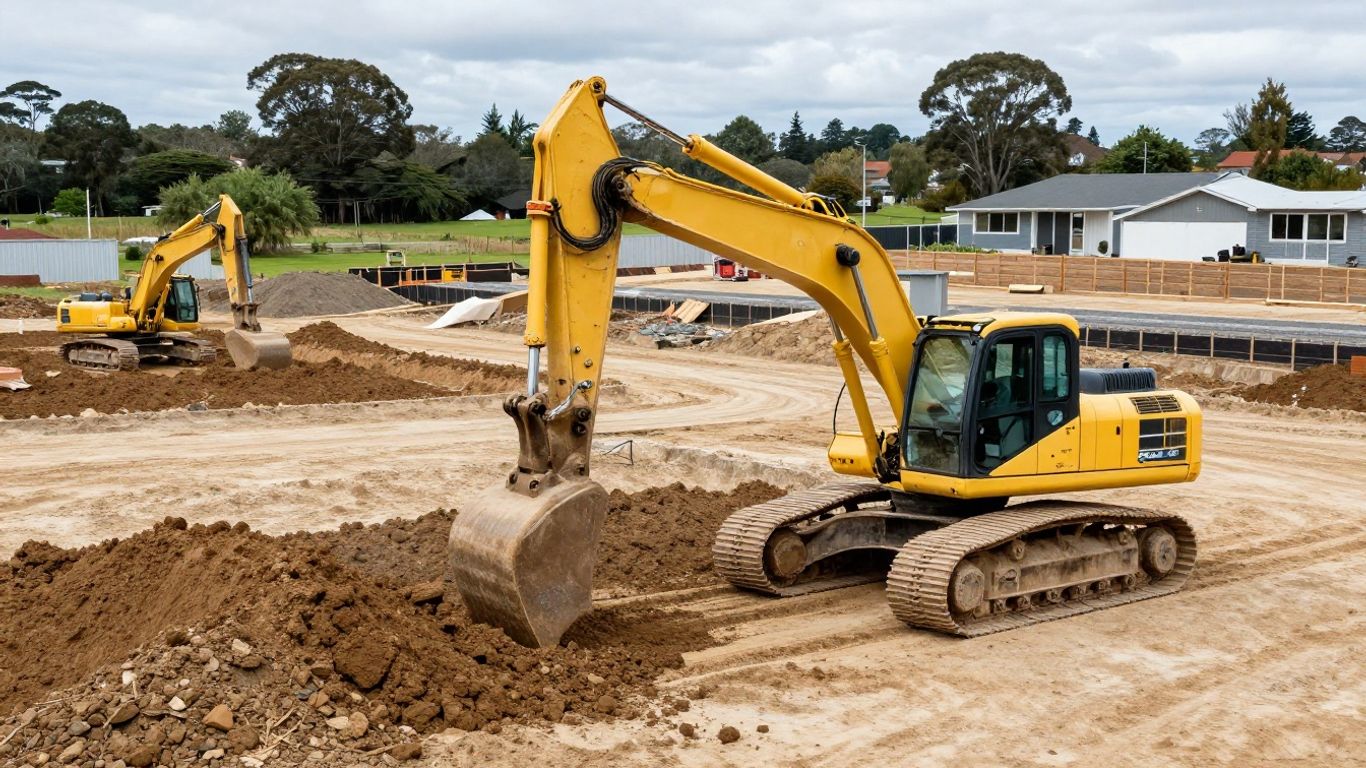
Residential earthworks often focus on precision for house pads and landscaping, whereas commercial sites demand high-volume excavation and infrastructure integration. Homeowners usually need smaller, agile equipment that can navigate tight site access without damaging existing street-front structures. Commercial managers, meanwhile, prioritize speed and the ability to handle massive spoil removal within strict development windows. Peard Excavation manages these distinctions by providing in-house teams that ensure accountability from the first cut to the final site handover.
Determining the volume of earth movement involved
Calculating your cut and fill requirements early on saves significant money by reducing the need for imported or exported fill. Professionals use laser-guided tools to map these volumes precisely at the planning stage. This step eliminates guesswork about how much spoil might need to leave the site and allows for more accurate budgeting.
Planning for site clearance and vegetation removal
Clearing a site involves more than just pulling up weeds; it requires systematic removal of topsoil, vegetation, and hidden debris that might compromise a foundation. If this is not done correctly, organic matter left in the ground can rot, creating voids that potentially undermine structural integrity. Proper clearance protocols ensure the land is stripped back to a clean, stable layer, setting the groundwork for your structural foundations.
Key services offered by Tauranga earthworks contractors
Successful earthworks rely on a combination of technical skill and the right tool for the specific ground profile. Having a team that can handle both the digging and the subsequent drainage or support work ensures that your build does not stall while waiting for different crews.
Bulk excavation and foundation preparation
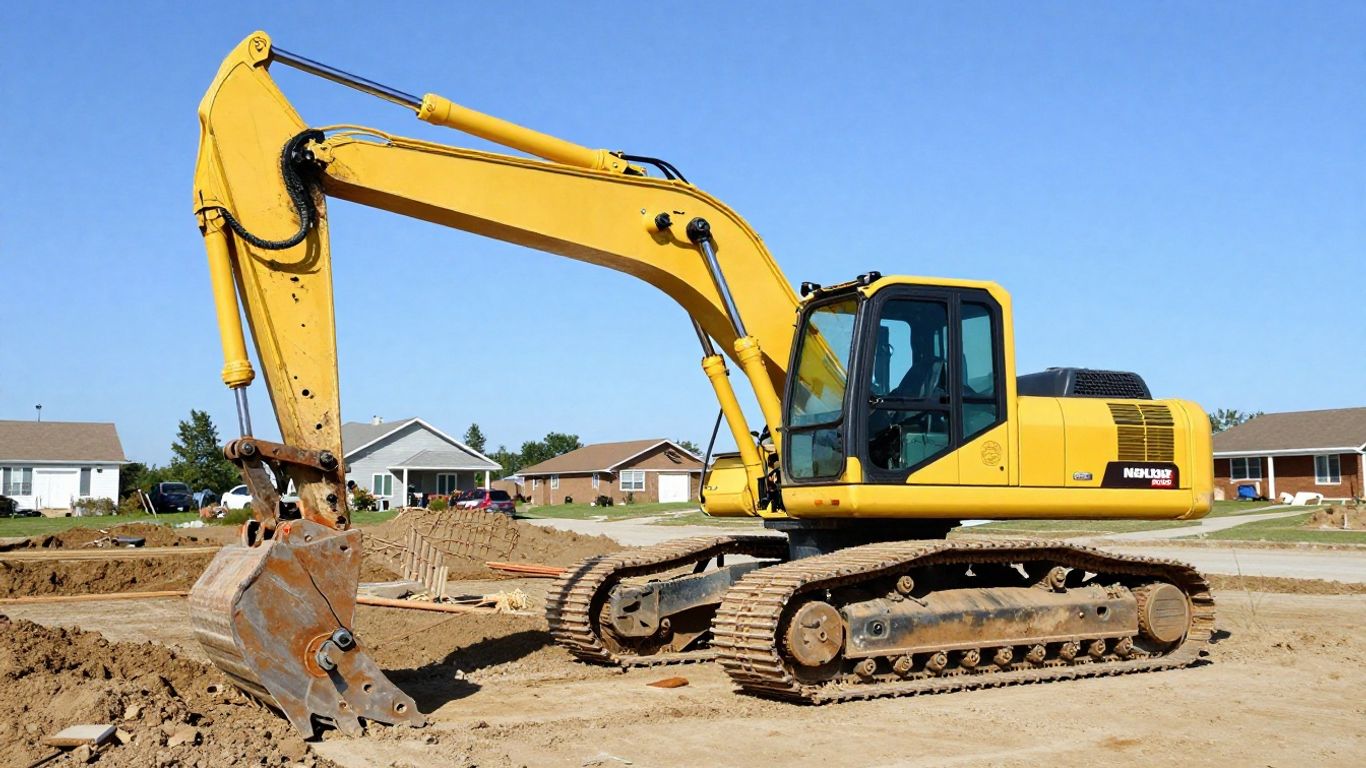
Moving large quantities of soil requires reliable, high-capacity machinery to keep projects moving. When you partner with experienced Peard Excavation teams, the use of modern equipment like 8nd-wheelers and laser-guided grading helps maintain tolerances within millimetres. This precision is vital, as a level foundation base dictates the success of every structural step that follows.
Retaining wall design and structural installation
If your property features a slope, retaining walls become essential to manage earth pressures and maximize usable flat area. A professionally installed wall does more than hold dirt back; it incorporates drainage paths to prevent hydrostatic pressure build-up. Choosing the right wall type—whether keystone, block, or timber—depends on height requirements and soil conditions.
Drainage solutions and storm water management
Effective site management requires integrated plumbing and drainage, which is why having an in-house crew is so advantageous. By combining excavation with drainage installation, you avoid the common pitfalls of subcontractor coordination, such as split accountability or significant delays in site completion. The following table illustrates typical foundation and drainage tasks performed during prep:
| Service Category | Primary Benefit | Typical Application |
|---|---|---|
| Bulk Earthworks | Site Levelling | Large scale house pads |
| Retaining Walls | Erosion Control | Steep slope management |
| Drainage Install | Water Mitigation | Stormwater & wastewater |
Trenching for utility connections
Utility trenching must hit precise depths and gradients to ensure compliant connections for water, power, and telecommunications. Using modern drilling or augering techniques minimizes ground disturbance while ensuring that conduits are placed safely away from foundation edges. This proactive approach ensures that your service connectivity is ready well before the final building stages.
How to vet potential earthworks companies in Tauranga
Selecting a contractor should be a calm, methodical process based on evidence of past performance and technical capability rather than just the lowest quote. You need to ensure the team can handle your site’s specific quirks.
Assessing past project references and local portfolios
Local success stories provide the best indicator of a company’s reliability. Look for portfolios that demonstrate work on sites similar to your own, such as steep residential blocks or commercial developments in the Bay of Plenty area. Verifying their history helps ensure they have managed similar site constraints effectively in the past.
Verifying machinery capacity and equipment availability
- Confirm the fleet includes specialized attachments like tiltrotators for complex digging.
- Inquire about the maintenance schedule for heavy equipment.
- Check for laser-guided grading systems for precision in foundation work.
- Ensure the team can access your site without causing damage to existing infrastructure.
Evaluating technical expertise in specific Bay of Plenty soil types
Soil behavior varies wildly across the Bay of Plenty, especially where volcanic deposits are present. An expert contractor will recognize these variations and adapt their digging strategy accordingly. Understanding whether a site will behave like sand or heavy pumice is crucial for maintaining slope stability and ensuring drainage systems actually work.
Confirming licensing and professional insurance status
Operating heavy machinery on residential land carries significant risks, so you must confirm that the company holds adequate liability insurance. A reputable contractor will be happy to provide documentation. This step confirms that they operate a professional, legally compliant business, which protects you from liability throughout the project lifecycle.
Navigating site constraints and ground conditions in the Bay of Plenty
Every piece of land in the Bay of Plenty has a unique personality, and your contract should account for this. Ignoring the specific ground conditions often leads to project delays or, worse, long-term foundation failure.
Understanding volcanic soil impacts on build stability
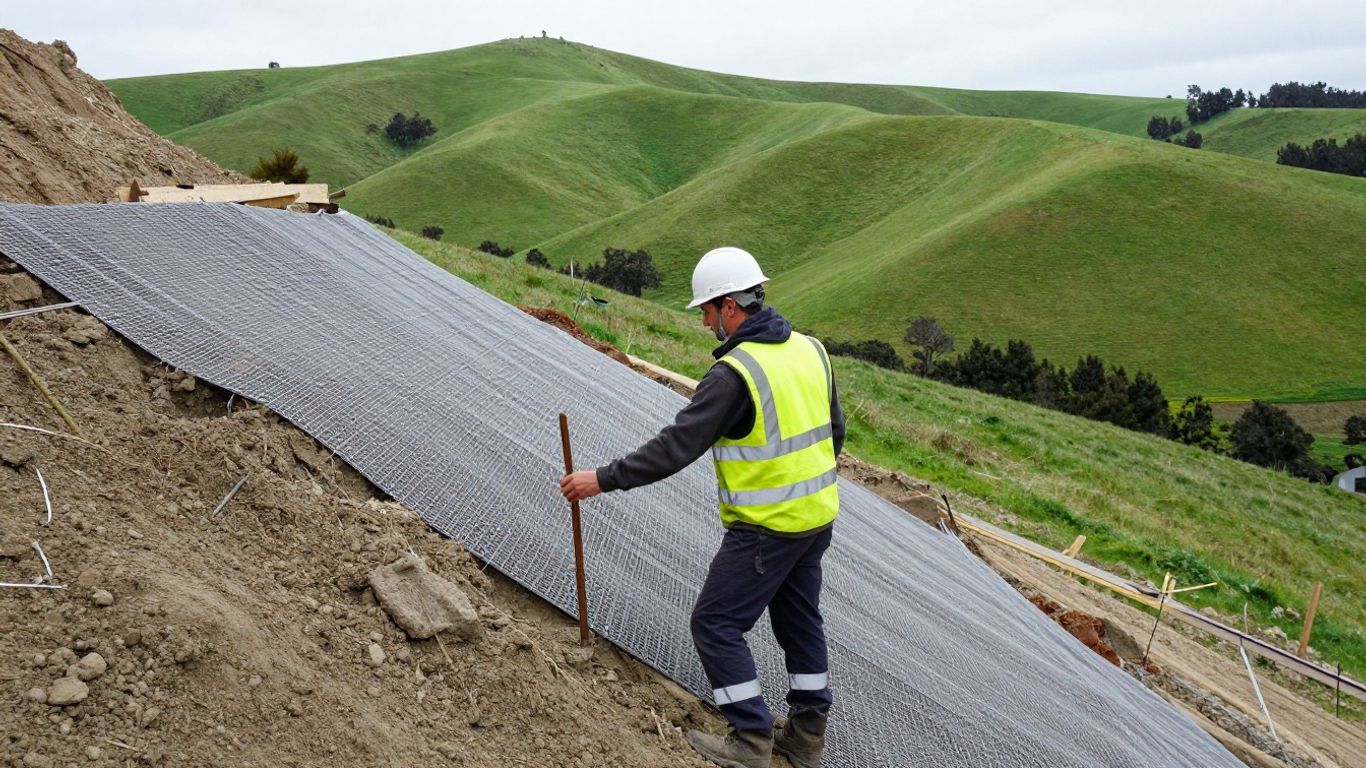
Much of our local region contains volcanic materials that require specific compaction techniques to guarantee build stability. If this soil is not managed correctly, properties may face settling issues later. Investing in expert geological advice is the best defense against these risks, ensuring the base is compacted to council requirements.
Managing slope stability and geotechnical erosion control
On sloping sites, water runoff can quickly erode a construction site if the appropriate sediment management is not installed. Contractors must implement precise grading and drainage before moving on to the build phase. Proper erosion control acts as a buffer, ensuring the earth remains firm during high-rainfall events.
Working within limited access residential or suburban sites
Many urban builds feature narrow driveways or minimal space between neighbors, which can severely restrict the size of machines. Expert local contractors utilize compact excavators with high versatility to complete heavy tasks without needing excessive space on your site. This adaptability allows construction to proceed quickly and safely, even on highly constrained lots.
Understanding safety and regulatory compliance in NZ
Safety standards exist to protect both your property and the public, and they are non-negotiable. Building a foundation without formal sign-off from the council or without adherence to health and safety acts creates a legal liability for the landowner.
Adhering to Health and Safety at Work Act standards
Every site crew must maintain rigorous safety protocols, including site induction for all visitors and strict management of heavy machine exclusion zones. This is not about paper-pushing but about ensuring that every worker returns home safely every day. Ask your contractor about their specific site safe practices and safety documentation.
Navigating resource consent and Tauranga City Council requirements
Many earthworks require specific council consents, particularly if you are altering the slope or excavating near protected ecological zones. Professional contractors help clients navigate these bureaucratic channels, ensuring that all planning documents are aligned with the Tauranga City Council standards, avoiding potential red-tape delays.
Managing environmental impacts and sediment control protocols
Installing silt fences and sediment traps before any soil is moved is a fundamental practice in the Bay of Plenty. These environmental measures prevent mud from clogging the local town storm drains and ensure you remain in compliance with council environmental regulations. Proactive planning here ensures your site stays clean, safe, and legally compliant throughout the winter months.
Essential questions to ask before signing a contract
Before you commit, it is vital to have the fine details of your project defined. A clear agreement is the best tool for preventing friction once the work has started.
Clarifying project contingency plans for weather delays
Rain can cause significant disruptions in the Bay of Plenty. Ask your contractor exactly how they manage work scheduling during extreme weather. Clear communication here helps manage expectations about potential shifts in the estimated completion date.
Understanding how cost variations and change orders are calculated
Construction rarely goes exactly as planned once we start clearing the surface. Ask your contractor to explain their policy on variations. A transparent fee structure for additional work prevents mid-project surprises and keeps the working relationship professional and focused on achieving the result.
Requesting detailed breakdowns of estimated project timelines
Ask for a clear, written sequence of events, identifying which stages rely on outside inspection or third-party approval. This timeline helps you coordinate with builders and other specialists who need the land prepared before they can proceed. Having a clear schedule is the marker of a professional team.
Conclusion
Choosing the right partner for your ground preparation will save you significant time, money, and stress throughout your build. By focusing on contractors who emphasize transparent communication, modern machinery, and deep knowledge of local Bay of Plenty conditions, you ensure a solid start for your project. A well-managed earthworks project guarantees that your structure sits on a foundation you can trust for years to come.
Frequently Asked Questions
Is a consent required for moving dirt on my property?
Whether you need a consent depends on the volume of earth moved, the slope of the land, and your proximity to neighbors or protected areas. Local council rules on excavations change based on these site characteristics, so it is best to have an assessment done before starting work.
How does soil type affect my overall construction cost?
Different soils, such as loose volcanic ash or rockier regions, require different containment, compaction, and clearing strategies. Soils requiring heavy stabilization or removal will naturally increase your budget compared to standard, stable building pads.
What happens if bad weather hits during the excavation phase?
Professional contractors typically account for weather risks in their scheduling and will implement protective measures like silt fences to maintain site stability. It is standard to discuss these delay protocols with your contractor prior to signing the initial contract.
How can I ensure my retaining wall is built safely?
Safety is achieved by ensuring the wall is built to an engineered design that specifically addresses the load-bearing requirements of your site. This includes choosing the right materials, such as interlocking blocks or high-grade timber, alongside the correct back-drainage to manage water pressure.
What are the main benefits of hiring an owner-operator business?
Owner-operators often provide more direct accountability, as the person running the machines is the one managing the business. This structure tends to lead to clearer communication and faster decision-making if unexpected issues arise while digging.
Can I be on-site while the earthworks are happening?
While property owners are generally welcome, you must strictly follow the site safety plan, which likely limits access to specific safe zones away from heavy machinery. Your contractor will confirm the required safety gear and provide a brief induction upon your arrival at the site.
Why is laser-guided grading important for my house pad?
Laser-guided systems ensure that the foundation surface is perfectly level to within millimetres, which is critical for supporting the structural integrity of your building. This accuracy reduces the amount of concrete needed for the floor and helps avoid issues related to floor level errors during the carpentry or finishing phases.